Guides
Influencer agencies and platforms: a buyer's checklist
Compare influencer agencies and platforms on creator data, disclosure controls and exit terms, and know what to ask before you sign. A buyer's checklist.
What to take away
- Decide whether you are buying labor, software, or one narrow function, because influencer agencies, platforms and tools are priced differently.
- Match the model to the jobtalent representation, brand-side campaign delivery, or a single channel specialty.
- Score platforms on creator data, disclosure controls, and payout terms before you look at the dashboard.
- Put usage rights, exclusivity windows, and FTC disclosure duties in the contract before the first post goes live.
Three separate buys: agency, platform, tool
An influencer marketing agency sells people and process. A platform sells software and access to a creator database. A tool handles one narrow job, such as fraud scoring or disclosure scanning.
Buyers who blur these lines pay twice for the same creator list. Work through how talent agency deals are checked before you accept a roster or a fee.
Three separate buys
Who sells it
- Representation
- Talent agencies such as CAA and UTA
- Campaign delivery
- Brand-side agencies such as Whalar, Viral Nation and Obviously
- Software access
- CreatorIQ, Traackr, GRIN, Aspire and Upfluence
- Single function
- HypeAuditor and disclosure scanners
What to check
- Representation
- Commission rate, contract length, side deals
- Campaign delivery
- Named team, creator payment terms, reporting
- Software access
- Data source, refresh rate, export rights
- Single function
- What the score means and what it misses
Match the agency model to the work
Agency labels hide very different businesses. A representation firm answers to the creator, while a campaign shop answers to the brand. Comparing them on one scorecard wastes the first meeting.
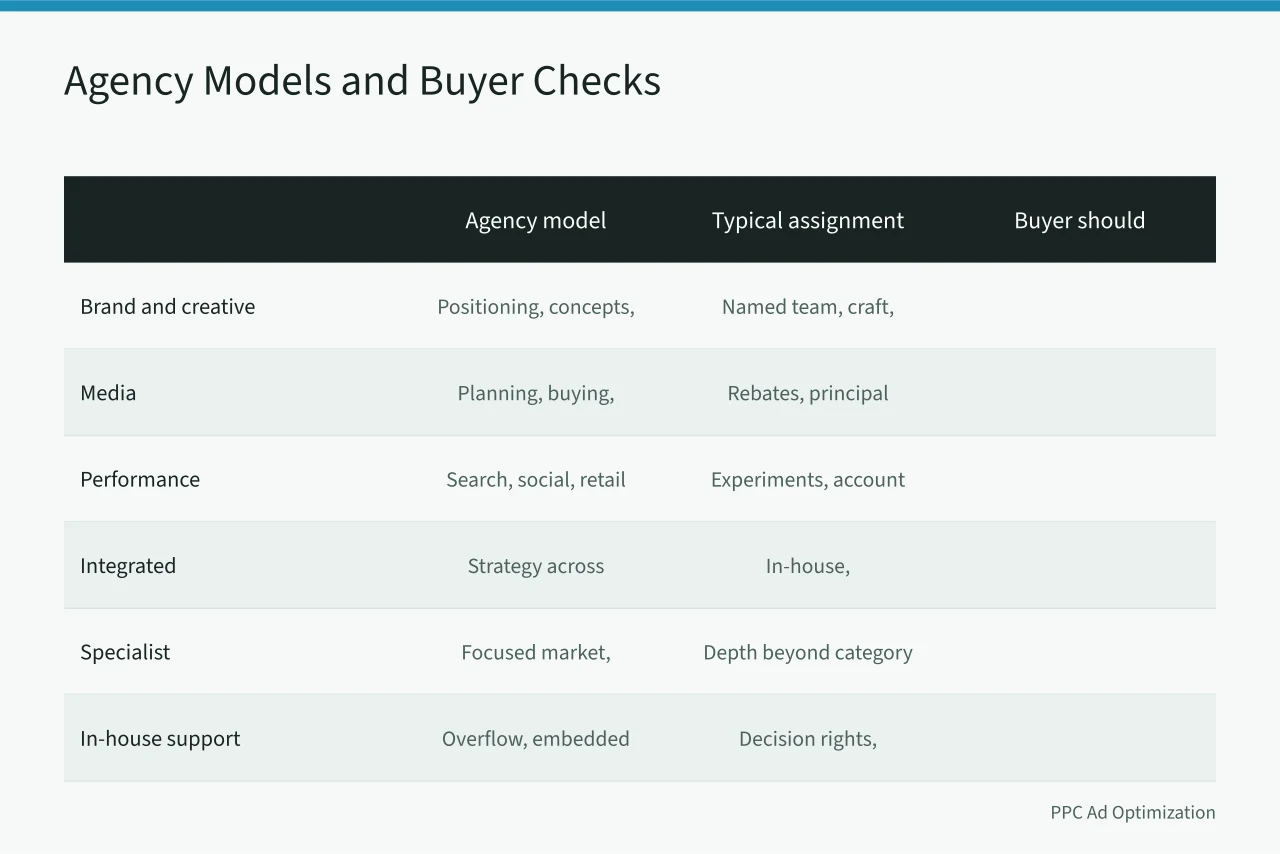
Talent agencies represent the creator and take a commission on booked work. Brand-side influencer agencies are paid by the brand and report to it. Some firms run both through separate entities, so ask which entity signs, invoices, and holds creator data.
California's Talent Agencies Act, at Labor Code sections 1700 to 1700.47, licenses and regulates talent agencies in the state, including what a commission may and may not cover. The Labor Commissioner's office issues those licenses and hears disputes over them, so ask what the commission includes and what it excludes, and check who signs the contract and who holds the creator relationship before hiring talent agencies.
The Labor Commissioner publishes the list of licensed talent agencies, so a buyer can check a name against it before signing rather than after a dispute.
Compare platforms on data, not the demo
Ask what the creator database actually holds. A polished dashboard can sit on a thin index.
Compare platforms on data
- Where audience data comes from and how often it refreshes
- Whether creator records and campaign results export without an extra fee
- How the tool flags paid partnership disclosures
- What happens to your data when you cancel
- Payout rails and currency, since CAD and USD settle differently
Disclosure flags come from the platforms themselves. Meta's branded content tool adds a "Paid partnership" tag on Instagram and Facebook, TikTok has a Branded Content toggle, and YouTube has a paid promotion checkbox. A tool that cannot read those labels cannot audit the posts that matter.
Platform pricing follows the same patterns as other software, with seats, volume tiers, and data add-ons, as in the overview of pricing models for influencer marketing.
A platform that already holds the creators you work with beats one with a larger index you never touch. Ask for a live walkthrough of a niche you actually buy in, not a category demo. If creator content is the main output, check which UGC platforms hold up under real volume before you sign a licence.
Test with a bounded paid assignment
- Send every finalist the same brief and the same ten-day window.
- Ask for a named creator list with rates, audience notes, and past results.
- Require a disclosure plan for one paid post on one platform.
- Score every response on the sheet you wrote before the pitches.
A weak test response tells you more than a strong pitch deck.
Where the budget lines sit
Budgets split across retainers, platform seats, creator fees, production, and usage renewals. Retainer models bill for hours; output models bill per asset, so compare the volume you are actually buying before you compare totals.
Creator fraud inflates every line. Follower audits belong on the first invoice, not in a post-mortem, and the checklist on choosing fraud detection tools covers the checks that catch purchased audiences early.
Disclosure rules you cannot delegate
The FTC's Endorsement Guides, at 16 CFR Part 255, require a clear and conspicuous disclosure, and the brand shares liability for a hashtag buried at the end of a caption. Its guidance on social media influencer disclosures sets the standard a campaign brief should meet.
Write the disclosure wording into the brief, the creator contract, and the approval step. Nothing should publish before a second person reads the caption.